
Agra’s Mughal heritage extends far beyond the Taj Mahal. The city and its surroundings contain imperial forts, marble tombs, historic gardens and a former Mughal capital, each offering a different perspective on India’s architectural history. Travellers researching the places to visit in Agra can discover these landmarks at a comfortable pace with thoughtful itinerary planning and knowledgeable guiding. If you prefer a personalised experience, explore our private sightseeing around Agra options while planning your journey.
Best Places to Visit in Agra for Mughal Heritage
Five destinations offer a deeper understanding of Mughal history: Agra Fort, Itimad-ud-Daulah, Mehtab Bagh, Akbar’s Tomb at Sikandra and Fatehpur Sikri. Each has its own architectural character, historical significance and visitor experience. Some can be combined into a local sightseeing itinerary, while Fatehpur Sikri is generally better planned as a separate excursion.
1. Agra Fort: Discover the Mughal Empire’s Imperial City
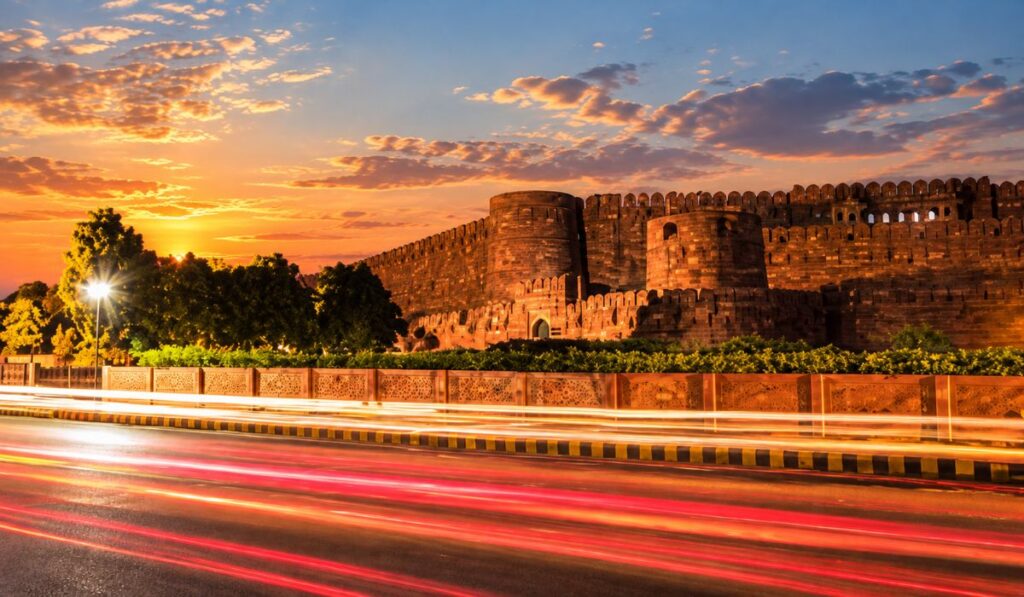
Agra Fort is one of the most significant historical places to visit in Agra, combining massive red sandstone fortifications with palaces, courtyards and audience halls. It received UNESCO World Heritage status in 1983 and reflects the development of Mughal military and residential architecture.
Emperor Akbar commissioned the fort’s major reconstruction in the sixteenth century. Later, Shah Jahan transformed several interior spaces with white marble, creating a contrast between Akbar’s sandstone architecture and the more refined decorative style associated with Shah Jahan.
What to See Inside Agra Fort
Look for Jahangir Mahal, Khas Mahal and the audience halls, which reveal different aspects of imperial life. Musamman Burj is another notable feature because of its architectural detail and view towards the Taj Mahal.
Allow around two hours or more, depending on your interests and walking pace. The complex includes uneven surfaces, steps and substantial walking, so comfortable footwear is advisable.
An expert-led private guided heritage tour can help visitors understand the architectural changes and historical stories associated with the fort.
For historical details, consult the UNESCO World Heritage designation for Agra Fort.
Image placement: Agra Fort’s red sandstone architecture and palace courtyard.
Suggested image alt text: Agra Fort red sandstone architecture, one of the best places to visit in Agra.
2. Itimad-ud-Daulah: Explore Mughal Marble Craftsmanship
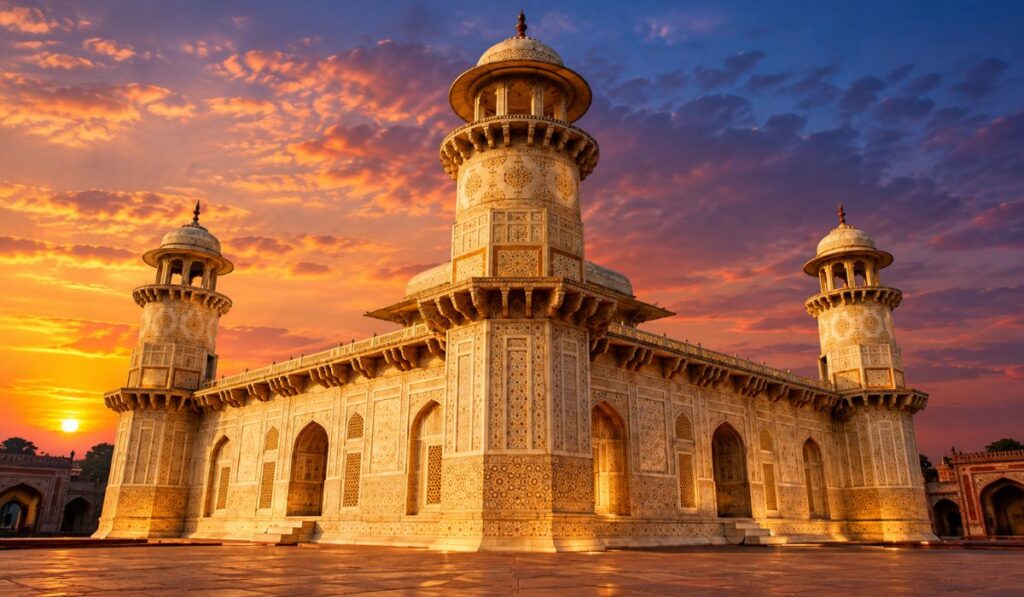
The Tomb of Itimad-ud-Daulah stands on the eastern bank of the Yamuna River. Empress Nur Jahan commissioned it for her father, Mirza Ghiyas Beg, and construction took place between 1622 and 1628.
The monument is celebrated for its white marble surfaces and intricate pietra dura, a decorative technique in which coloured stones are set into marble to create detailed patterns. Floral designs and delicate craftsmanship make the tomb particularly interesting for visitors who appreciate architectural detail.
Often called the Baby Taj, the monument offers a different perspective on the evolution of Mughal funerary architecture. Its decorative work is worth examining carefully rather than rushing through the visit.
Allow approximately 45 minutes to an hour, adjusting the time according to your interests and current visitor conditions.
Image placement: Itimad-ud-Daulah’s white marble inlay work.
Suggested image alt text: Itimad-ud-Daulah Tomb, a historical attraction among the places to visit in Agra.
3. Mehtab Bagh: A Historic Garden with a Different Taj Mahal View
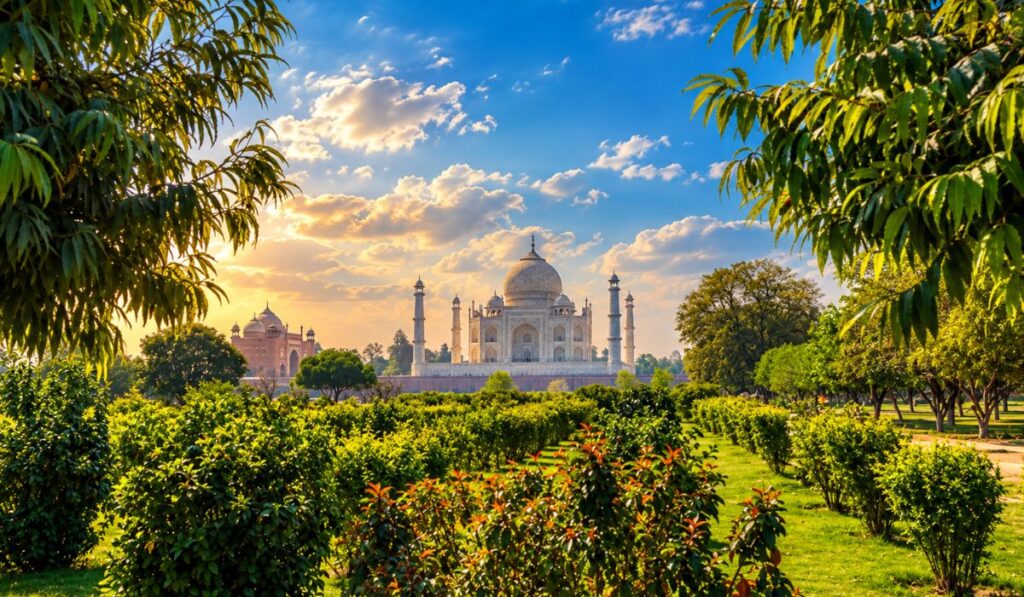
Mehtab Bagh is a historic garden on the northern side of the Yamuna, opposite the Taj Mahal. Its location provides a different perspective of the famous monument and makes it a useful addition to a broader heritage itinerary.
The garden is associated with the Mughal tradition of riverside landscape design. Visitors interested in photography may wish to plan their visit around the available light, weather and current access arrangements.
Late-afternoon light can be attractive for photography, although the actual conditions depend on the season and weather. Check opening times before travelling and allow enough time to explore the garden without rushing.
Mehtab Bagh also demonstrates that the places to visit in Agra include more than palaces and tombs; gardens and landscape design form an important part of the region’s historical story.
Image placement: View of the Taj Mahal from Mehtab Bagh.
Suggested image alt text: Mehtab Bagh garden viewpoint across the Yamuna towards the Taj Mahal.
4. Akbar’s Tomb at Sikandra: An Important Mughal Monument
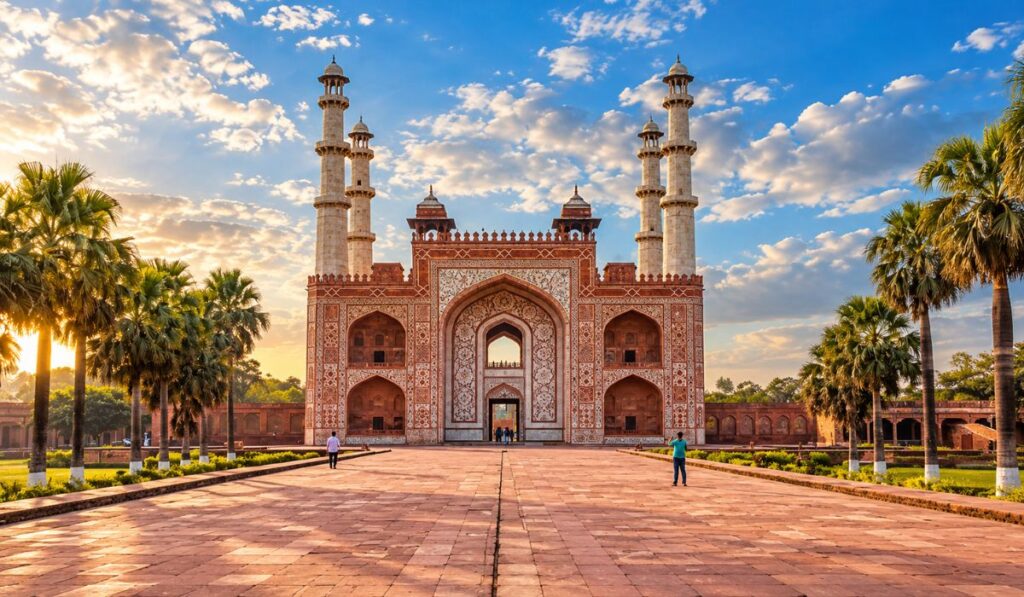
Akbar’s Tomb is located in Sikandra, northwest of Agra’s city centre. The monument was begun during Akbar’s lifetime and completed under his son Jahangir in the early seventeenth century.
Its distinctive design includes multiple levels, red sandstone architectural elements and an upper marble pavilion. Unlike many familiar Mughal mausoleums, its overall form does not follow the conventional large central dome design.
The surrounding garden adds to the experience, offering a different setting from the more densely visited monuments near central Agra. Travellers interested in Mughal architecture can compare its design with the tombs and palaces elsewhere in the region.
Allow roughly one to one-and-a-half hours, depending on your pace. Check current access information and account for road traffic when arranging transport.
Image placement: Akbar’s Tomb at Sikandra with its monumental gateway.
Suggested image alt text: Akbar’s Tomb at Sikandra, one of the historical places to visit in Agra.
5. Fatehpur Sikri: Extend Your Heritage Journey Beyond Agra
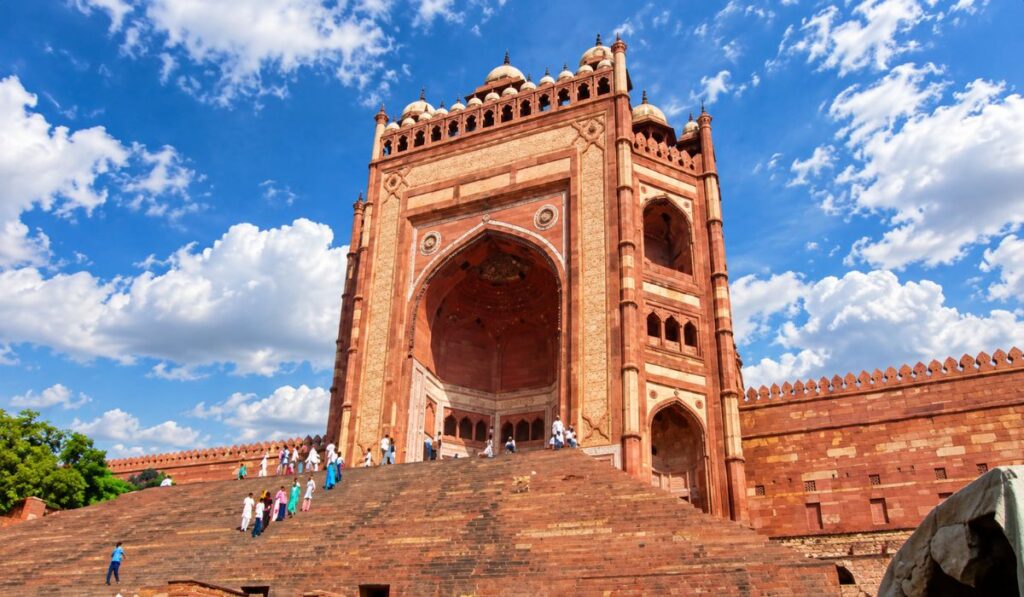
Fatehpur Sikri is a historic Mughal city established under Emperor Akbar in the sixteenth century. Located outside Agra, it preserves a remarkable collection of red sandstone buildings, courtyards and gateways.
Notable structures include Buland Darwaza, the Tomb of Sheikh Salim Chishti, Panch Mahal and Diwan-i-Khas. Each provides insight into the architecture, religious setting and courtly life of Akbar’s period.
Fatehpur Sikri is generally better treated as a separate excursion rather than added to an already crowded day of sightseeing in Agra. Allow sufficient time for the drive, entry procedures and exploration of the complex.
Visitors should confirm current parking, transport, opening and entry arrangements before departure. A well-planned excursion makes it easier to appreciate the site without hurrying between its major structures.
For travellers continuing to Jaipur, Fatehpur Sikri may fit naturally into a wider luxury Golden Triangle itinerary.
Image placement: Buland Darwaza and the red sandstone architecture of Fatehpur Sikri.
Suggested image alt text: Fatehpur Sikri, a historic Mughal destination near Agra.
How to Plan a Comfortable Luxury Heritage Tour in Agra
Exploring several historic monuments involves coordinating transport, walking time, entry arrangements and breaks. A thoughtful itinerary helps visitors spend more time appreciating the architecture and less time managing logistics.
Choose Transport That Fits Your Itinerary
Private, air-conditioned transport can make moving between attractions more convenient, especially during hot weather. Confirm the vehicle category, pickup arrangements, waiting time and drop-off points before booking.
Consider a Knowledgeable Guide
A guide with appropriate credentials and a strong understanding of Mughal history can explain architectural features that visitors might otherwise overlook. Verify credentials and agree on the scope of the service in advance.
Allow Time for Walking and Rest
Large complexes such as Agra Fort and Fatehpur Sikri involve considerable walking. Build in water breaks, time for photographs and a realistic schedule rather than trying to visit every attraction as quickly as possible.
Check What Your Tour Includes
Before confirming a private heritage experience, check whether the price includes transport, guiding, monument tickets, parking or tolls, meals and other optional services. Review the available luxury tour add-ons if you want to understand which additional arrangements may be available.
Can You Explore the Places to Visit in Agra in One Day?
Yes, but the best itinerary depends on your interests and how much time you want to spend at each attraction.
Option 1: A Focused One-Day Heritage Route
Prioritise Agra Fort, Itimad-ud-Daulah, Akbar’s Tomb and Mehtab Bagh. Allow time for transfers, a meal and rest breaks. This approach works best when the Taj Mahal is planned for a separate visit.
Option 2: A Two-Day Heritage Experience
Spend one day exploring the main attractions within Agra and dedicate another half-day or more to Fatehpur Sikri. This gives you more time to understand the architecture without rushing through the former imperial city.
The right choice depends on opening arrangements, traffic, the season and your preferred pace. Confirm current visitor information before finalising the itinerary.
Frequently Asked Questions
What are the best places to visit in Agra beyond the Taj Mahal?
Agra Fort, Itimad-ud-Daulah, Mehtab Bagh and Akbar’s Tomb are important local attractions. Fatehpur Sikri is another major heritage destination that generally requires additional travel time.
Which historical places in Agra can be visited in one day?
A carefully planned day can include several attractions within Agra. Choose the number of stops according to walking requirements, travel time and how thoroughly you want to explore each monument.
Is Fatehpur Sikri suitable for a half-day trip?
It can be planned as a half-day excursion from Agra, depending on traffic, entry arrangements and time spent exploring the complex. Confirm current conditions before departure.
Is a private heritage guide worthwhile?
A knowledgeable guide can help explain the historical context, architectural details and differences between Mughal monuments. Check credentials and service arrangements before booking.
What should visitors check before travelling?
Confirm current opening times, ticket prices, access rules, transport arrangements and photography restrictions using official visitor information. These details can change.
For additional information about entry logistics, timings and seasonal considerations, consult our complete Taj Mahal visitor guide.
Discover Agra Beyond the Taj Mahal
The places to visit in Agra extend from the imperial architecture of Agra Fort to the marble craftsmanship of Itimad-ud-Daulah, the gardens of Mehtab Bagh and the historic city of Fatehpur Sikri. These monuments reveal different aspects of Mughal history and offer travellers reasons to explore beyond the region’s most famous monument.
With realistic planning, comfortable transport and informed guiding, you can build a heritage itinerary around your interests instead of rushing between attractions.
If you are planning a visit, contact Taj Mahal Luxury Tour to discuss suitable private sightseeing arrangements.