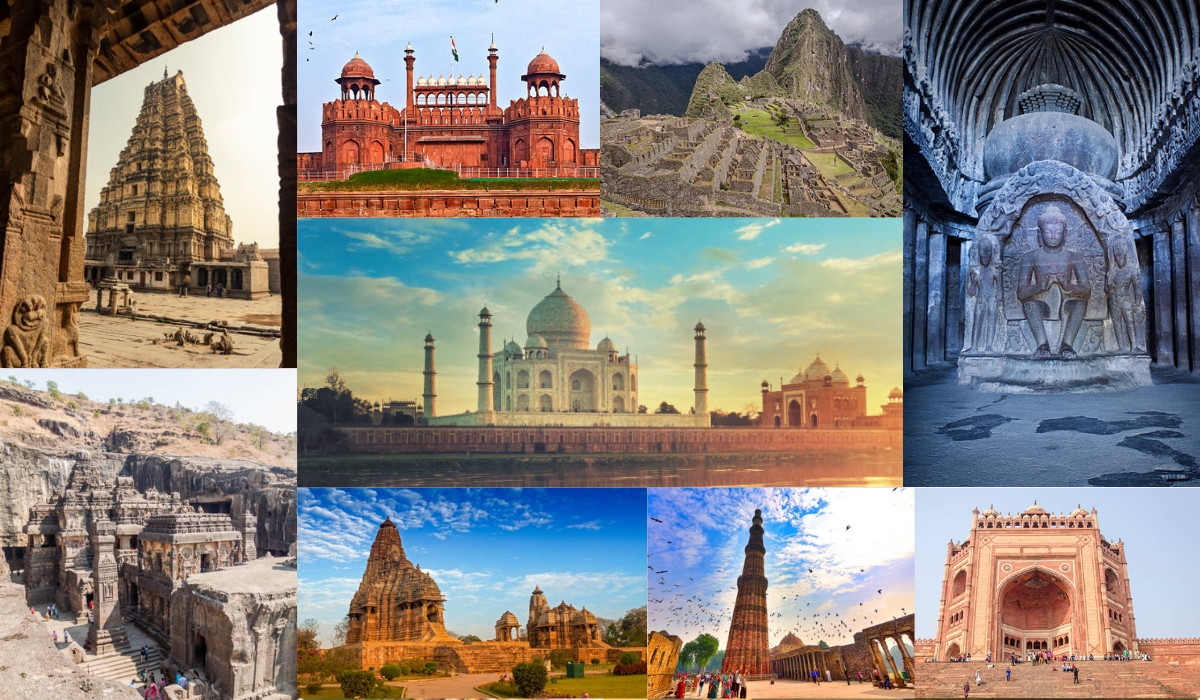
 India — a land of timeless culture, royal kingdoms, spiritual awakening, and unmatched architectural brilliance — is home to some of the most extraordinary heritage sites in the world. With more than 40 UNESCO World Heritage Sites, India preserves its history in grand palaces, rock-cut temples, ancient caves, breathtaking forts, and meticulously carved monuments.
If you’re a traveller who loves history, architecture, photography, or cultural exploration, these sites offer journeys that stay with you forever.
This detailed guide covers the Top 10 World Heritage Sites in India, their history, architecture, top highlights and travel tips — making it perfect for tourists, bloggers, and heritage enthusiasts.
1. Taj Mahal, Agra
The Icon of Eternal Love**
No monument in the world captures human emotions like the Taj Mahal. Built by Mughal Emperor Shah Jahan in the 17th century in memory of his beloved wife Mumtaz Mahal, this white marble masterpiece is considered one of the greatest architectural wonders in human history.

Why It’s Special
- Perfect symmetry from every angle
- White marble that changes colour with sunlight
- Fine inlay work using precious stones
- UNESCO’s most visited heritage site in India
Architectural Highlights
- Legendary marble craftsmanship
- Charbagh Persian-style gardens
- Main mausoleum with intricate pietra dura art
- Calligraphy and Quranic verses carved in black marble
Top Travel Tips
- Best time: Sunrise or full-moon night
- Closed on Fridays
- Hire a licensed guide to understand the history deeply
2. Qutub Minar, Delhi
India’s Towering Victory Monument**
Standing tall at 72.5 metres, the Qutub Minar is the tallest brick minaret in the world. Built in 1193, this UNESCO site represents the beginning of Islamic rule in India.

Why It’s Famous
- Indo-Islamic architecture
- Arabic and Nagari inscriptions
- Rust-free Iron Pillar dating back to 4th century
Must-See Structures in Qutub Complex
- Quwwat-ul-Islam Mosque
- Alai Darwaza
- Tomb of Iltutmish
- Alai Minar (unfinished tower)
Best Time to Visit
- Evening hours — perfect for photography
3. Red Fort Complex, Delhi
Symbol of India’s Independence**
Built by Shah Jahan in 1648, the Red Fort is one of Delhi’s most powerful symbols. India’s Prime Minister delivers Independence Day speeches from here every year.

What Makes It Unique
- Massive red sandstone walls
- Mughal royal chambers
- Diwan-i-Khas and Diwan-i-Aam
- Zenana quarters and royal baths
Top Experiences
- Light & Sound Show
- Museum showcasing Mughal and Freedom Struggle artefacts
4. Agra Fort, Agra
The Walled City of Mughal Power**
A massive fortress of red sandstone, Agra Fort was the main residence of Mughal emperors before Delhi became the capital. It is an entire walled city filled with palaces, halls, mosques and fascinating architecture.

Key Highlights
- Jahangiri Mahal
- Khas Mahal
- Musamman Burj (where Shah Jahan was imprisoned)
- Sheesh Mahal
Why Visit
Agra Fort gives a real glimpse into royal life — from war strategies to daily Mughal traditions.
5. Fatehpur Sikri, Uttar Pradesh
The Ghost Capital of Emperor Akbar**
In 1571, Emperor Akbar decided to build a completely planned city — Fatehpur Sikri. It became the Mughal capital for 15 years but was abandoned due to water shortage.

What to See
- Buland Darwaza (world’s tallest gateway)
- Salim Chishti Dargah
- Panch Mahal
- Jodha Bai Palace
- Diwan-i-Khas
Travel Tip
Sunset photography here is exceptional — red sandstone glows beautifully.
6. Khajuraho Temples, Madhya Pradesh
Sculptures That Celebrate Life**
Built by the Chandela dynasty, the Khajuraho Temples are famous for their intricate carvings depicting love, dance, gods, and everyday life.

Why They Are Extraordinary
- Finest example of Nagara-style temple architecture
- Thousands of detailed sculptures
- Celebrates human emotions and spirituality
Top Temples to Visit
- Kandariya Mahadev
- Lakshmana Temple
- Devi Jagdamba Temple
Best Time
- Winter months (Oct–Feb) for comfort and better visibility
7. Ajanta Caves, Maharashtra
Ancient Buddhist Art in Stone**
Dating back to 2nd century BCE, Ajanta Caves are home to India’s oldest surviving paintings. These murals depict the life of Buddha, ancient lifestyle, and traditional costumes.
Highlights
- 29 caves carved into a horseshoe-shaped valley
- Masterpiece murals showing Jataka Tales
- Peaceful monastic chambers
Why Visit
Perfect for art students, historians, and seekers of tranquillity.
8. Ellora Caves, Maharashtra
A Confluence of Hindu, Jain and Buddhist Art**
Ellora is unique because it houses monuments of three religions harmoniously. The star attraction is the Kailasa Temple, carved from a single giant rock.

Why It Stands Out
- World’s largest monolithic rock-cut temple
- 34 caves representing three religions
- Incredible engineering precision
Do Not Miss
- Cave 16 (Kailasa Temple)
- Jain Caves with beautiful pillars
- Buddhist monasteries
9. Hampi, Karnataka
The Lost Empire of Vijayanagara**
Spread across 26 sq. km, Hampi is a gigantic open-air museum filled with boulders, temples, palaces, stepwells, and royal pavilions.

Top Attractions
- Virupaksha Temple
- Vittala Temple & Stone Chariot
- Lotus Mahal
- Elephant Stables
- Royal Enclosure
Why It’s Memorable
Its surreal landscape mixed with ruins gives travellers an unforgettable experience.
10. Sun Temple, Konark
The Chariot of the Sun God**
Designed as a massive stone chariot pulled by seven horses, the Konark Sun Temple is a masterpiece of Kalinga architecture.

Highlights
- 24 decorated wheels representing time
- Intricate carvings portraying musicians, deities & daily life
- Symbolism of cosmic energy and time
Travel Tip
The annual Konark Dance Festival is a must-attend for culture lovers.
Why India’s World Heritage Sites Are Truly Special
India’s heritage isn’t just about monuments — it’s about stories.
Every temple, fort, cave, and palace reveals:
- ancient scientific knowledge
- artistic mastery
- diverse cultural influences
- spiritual evolution
- royal power and legacy
Visiting these sites is like travelling through centuries of history — each one adding a new layer of understanding about India’s incredible civilisation.
Practical Tips for Travellers
✔ Best Season to Explore
October to March — perfect weather for sightseeing.
✔ Ticket Booking
Most monuments now offer online booking to skip long queues.
✔ Photography
Allowed in most places except certain caves or delicate rooms.
✔ Guides
Always hire licensed guides to avoid misinformation.
✔ Dress & Comfort
Wear comfortable shoes — most sites require a lot of walking.
Conclusion
From the majestic Taj Mahal to the mystical ruins of Hampi, India’s World Heritage Sites are living chapters of history. They reflect the soul of the nation — its creativity, spirituality, diversity, and architectural excellence.
Whether you’re an explorer, photographer, student, or luxury traveller, these ten destinations promise journeys that enrich the mind and touch the heart.
“Don’t just admire history — experience it. Plan your unforgettable India heritage tour today!”